If you’ve been told you need gum surgery, laser treatment may be a gentler option. Dr. Christopher Banks uses a soft tissue diode laser at our Dupont Circle office to contour gums, treat gum disease, and release tongue-ties and lip-ties. The laser targets only the tissue being treated, so there’s less bleeding, less swelling, and faster healing than a scalpel or drill. Most patients don’t need anesthesia, and many return to normal activities the same day.
Laser dentistry treatments in our Washington, DC, dental office help prevent future dental problems and keep the gums healthy. We welcome you to learn more about how Dr. Banks uses lasers as part of our general dentistry services.
The Benefits of Dental Lasers
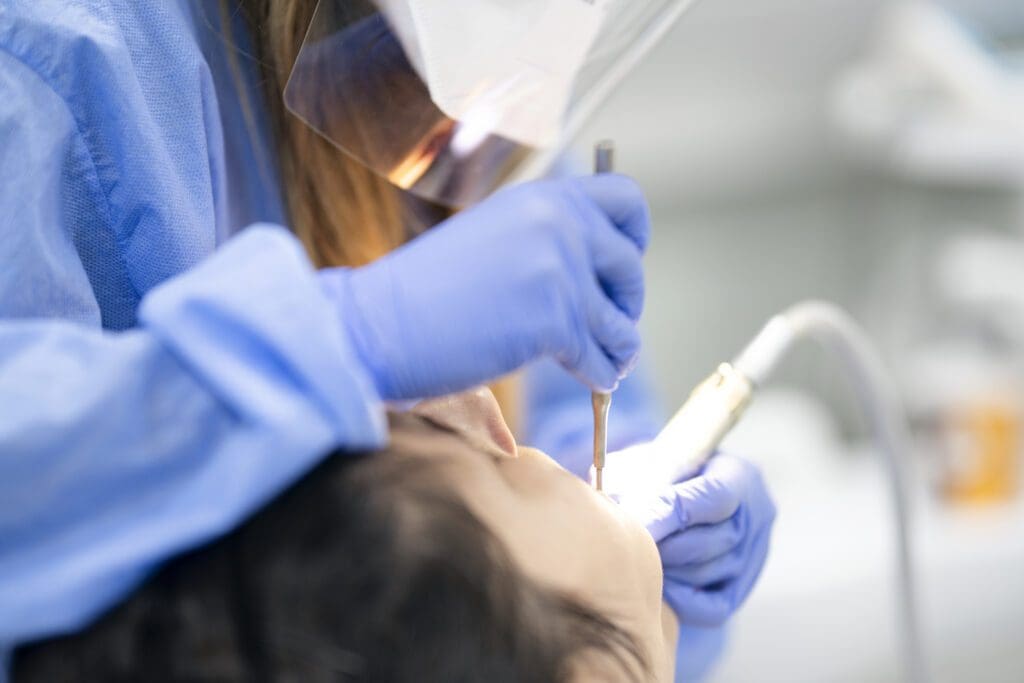
Laser dentistry is one of the best innovations in advanced dentistry and often used instead of a scalpel for various gum treatments. A laser beam is concentrated light energy that acts as a precise treatment instrument. Unlike scalpels, the laser can precisely target only diseased tissue so it won’t impact healthy tissues surrounding the treatment area. Laser dentistry services in our Washington, DC, dental office offer many benefits.
Comfortable Treatment
Laser dentistry is less invasive than using a scalpel. The treatment is more comfortable and less painful for the patient. Many patients don’t need local anesthesia when getting laser dentistry. The laser seals off nerve endings as it treats the gums to reduce pain and sensitivity.
Quiet Care
Lasers are a great option for patients who have dental anxiety. A scalpel is one of the tools that most commonly triggers patients with this condition. Lasers also don’t have the noise like that of a dental drill, another common trigger.
Quick Healing
Since laser procedures don’t require cutting your gums, there’s less bleeding during them. Like the nerve endings, the laser seals off blood vessels as it treats the area. No sutures are needed to close the wound, which can speed healing. Because lasers seal tissue, they help reduce the risk of infections.
A dental laser activates the body’s healing process so the area will heal even faster. You won’t have as much swelling and discomfort, leading to a shorter downtime after the procedure.
Laser Dentistry Services in Washington, DC
Dental lasers can treat hard tissue or soft tissue. Hard tissue lasers can prepare teeth for fillings or provide teeth whitening treatment. Soft tissue lasers treat the soft tissues, and can treat gum problems and tissue problems like tongue and lip tie. We offer multiple dental treatments that use a soft tissue laser.
Gingivectomy
One of the primary services in laser dentistry is a gingivectomy. This procedure removes gum tissue to expose more of the tooth.
It’s often used for patients with gummy smiles, where the balance between gums and teeth is off and more gums show than teeth. This makes your teeth look small. You may also have uneven gums that make teeth look bigger or smaller than others. A gingivectomy can give you an even and symmetrical smile.
Prepare for Cosmetic and Restorative Treatments
Sometimes, we may need to remove gum tissue to provide a better dental crown or porcelain veneer foundation. These treatments require a certain amount of tooth structure to ensure a good result. Exposing more of the tooth ensures that the restoration goes smoothly. We can gently target and remove a small portion of gum tissue with a laser.
Frenectomy
Tongue or lip ties occur when a piece of tissue called the frenulum is too tight and restrictive. The frenulum connects your lip to your gums and the tongue to the base of your mouth. When it is too tight, you can have problems speaking or eating normally.
With lasers, we can treat this condition without requiring a surgical procedure. Using the heat from a laser, we can gently cut the tissue that restricts the tongue or lips. This procedure is called a frenectomy.
Gum Disease
Our office uses lasers to treat periodontal disease. When you get gum disease, bacteria irritate the gum tissue, causing infection and inflammation. Pockets develop between the gums and jawbone, accumulating food debris and bacteria.
A dental laser can clean out these pockets. It reduces the risk of spreading infection since it sterilizes the area as it treats it. If you have damaged tissue, we can use a laser to remove those areas without impacting the healthy tissue in your mouth.
Dental Laser Recovery and Aftercare
Most patients feel mild soreness for a day or two after laser treatment. Soft tissue procedures usually have no bleeding, and you won’t need stitches. Swelling is minimal.
For the first few days, stick to soft foods and avoid hot, spicy, or crunchy foods. Drink plenty of water. If you had anesthesia, wait until the numbness wears off before eating to avoid biting your tongue or cheek.
Call our office if you have pain that gets worse instead of better, swelling that increases, or any bleeding that doesn’t stop.
Patient Review
Laser Dentistry FAQs
Do you want to learn more? Read answers to frequently asked questions about laser dentistry in our Washington, DC, office.
How long is dental laser treatment?
The length of your laser treatment will depend on your treatment type. Hard tissue laser treatments may take less time than soft tissue treatments. Treating tongue and lip tie may take under an hour, while gum contouring can take longer. Removing bacteria from the gums can take one to two hours.
But we’ll ensure you feel comfortable throughout your treatment. Lasers often reduce treatment time and discomfort for patients.
How many laser treatments will I need for gum disease?
The number of laser treatments you’ll need for gum disease depends on how severe your condition is. Mild cases may only need one session. Moderate or advanced gum disease may require two or more treatments spaced a few weeks apart. Dr. Banks will carefully remove bacteria and diseased tissue to help your gums heal at each visit.
Is laser dentistry safe?
Yes, dental lasers are safe. Before treatment, we will give you glasses to wear to protect your eyes from the laser’s light.
We’ll also use the appropriate laser for the type of treatment. Our office uses a soft tissue diode laser that treats the mouth’s gums and soft tissues. We’re trained to treat your soft tissues carefully with these types of lasers.
Lasers are also highly precise. Because of their precision, dental lasers will target the treated tissues and won’t affect the surrounding teeth or gums.
Who is not a good candidate for laser dentistry?
We won’t recommend dental lasers if we can only perform the treatment with traditional dental tools like drills. Our office will also not recommend laser gum treatment if you have mild gum problems.
We won’t need to remove your gum tissue if you have gingivitis or gum inflammation. Dr. Banks will review your options with you before he creates your specific treatment plan.
How soon can I eat or drink after laser gum treatment?
You should wait at least one to two hours before you eat or drink after laser gum treatment. If we use anesthesia, we suggest waiting until the numbness wears off to avoid accidentally biting your tongue or cheek. We also suggest sticking to soft foods and avoiding hot, spicy, or crunchy foods for the first few days. Drinking plenty of water and following post-care instructions will help speed up healing.
Can I combine laser treatment with other dental procedures?
Yes, depending on your needs, you can combine laser treatment with other dental procedures. We often use it alongside deep cleanings, gum contouring, or even in preparation for crowns and implants. Lasers enhance precision and healing, making many treatments less invasive. We’ll evaluate your specific case and recommend the best approach for your treatment plan.
Does laser dentistry require anesthesia?
Laser dentistry often doesn’t require anesthesia because it’s minimally invasive and causes little to no discomfort. But we may recommend a mild anesthetic for extra comfort for deeper treatments or if you have sensitive gums. The lack of drills and sutures makes laser procedures much easier to tolerate. We’ll ensure you’re completely comfortable throughout your treatment.
Can laser treatment help with receding gums?
Laser treatment can help manage gum recession but doesn’t regrow lost gum tissue. It can remove bacteria, stimulate healing, and improve gum attachment to help prevent further recession. We can also combine laser therapy with gum grafting for better results. If you’re concerned about receding gums, we’ll discuss the best treatment options to protect and restore your smile.
Get Advanced and Safe Dental Care Today
Dental laser treatment can effectively treat a gummy smile or diseased gum tissue. Contact Dupont Dental for comfortable laser dentistry treatment in Washington, DC, today at (202) 946-4720. You can also schedule your next dental appointment online. We welcome patients from Georgetown, Logan Circle, Capitol Hill, Mount Vernon Square, and Shaw.