A dental crown is designed to protect a weakened tooth and restore your smile, so it can be alarming when one suddenly comes loose or falls off. While this situation is rarely a true emergency, it does require prompt attention. Knowing how to respond can help you avoid discomfort, infection, or further damage until you see Dr. Christopher Banks. He offers emergency dental care and dental crown repair in Washington, DC.
Steps to Preserve a Dental Crown
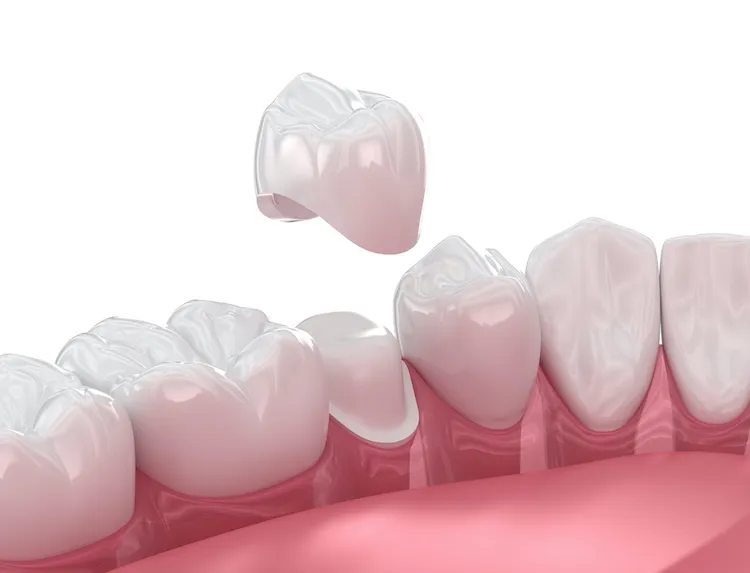
As soon as you lose a crown, you want to take steps to bring it to our office. We want to examine your crown and mouth to see the areas of damage and begin to plan your replacement. Follow these steps when a crown falls out.
Stay Calm and Assess the Situation
The first thing to do when a crown falls off is to stay calm. Check your mouth to see whether the crown came off in one piece and whether the underlying tooth is intact. In many cases, the tooth underneath is sensitive but not damaged.
If you feel pain when breathing in air or drinking something cold, that sensitivity is common and usually temporary. If you can find the crown, gently rinse it with water and set it aside in a clean container. Don’t scrub the crown or use any chemicals to clean it, because this could damage your restoration or affect how it fits later.
Protect the Exposed Tooth
Once the crown is off, the tooth underneath is more vulnerable than usual. Try to avoid chewing on that side of your mouth to prevent cracking or further irritation. Hot, cold, or sugary foods can trigger sensitivity, so sticking to lukewarm and soft foods is a good idea. If the tooth has sharp edges that are irritating your tongue or cheek, dental wax from a pharmacy can be used to cover the area temporarily. This can make you more comfortable until professional care is available.
Temporary Solutions at Home
In some cases, you may be able to place the crown back over the tooth as a short-term measure. After rinsing both the crown and your mouth with water, you can gently try to fit the crown back into place. It should slide on easily and feel natural when you bite down lightly. If it does not fit properly, do not force it.
Over-the-counter dental cement can sometimes be used to hold the crown in place temporarily. This is not a permanent fix, but it can help protect the tooth for a short period. Household glues should never be used, as they are toxic and can complicate professional repair.
Contact Your Dentist as Soon as Possible
Even if you manage to temporarily re-seat the crown, it is important to contact your dentist promptly. A fallen crown often indicates an underlying issue such as decay, weakened cement, or changes in the shape of the tooth. Your dentist will assess whether the existing crown can be reattached or if a new one is needed. If you experience severe pain, swelling, or bleeding, let the dental office know right away so they can determine how urgently you need to be seen. Acting quickly can often save the crown and prevent more complex treatment.
What to Avoid
Certain actions can make the problem worse if you lose a dental crown. Avoid chewing gum, caramels, taffy, or other sticky foods. These foods can pull on the exposed tooth or cause a temporary crown to come loose.
Try not to chew on the side of your mouth where the crown came off. Biting down on hard foods like ice, nuts, or hard candy can crack the tooth or cause pain.
Don’t ignore the problem or wait for it to fix itself. A tooth without a crown is more likely to develop decay, become sensitive, or break. The longer the tooth stays unprotected, the higher the risk of further damage.
It’s also important not to adjust the crown yourself. Filing, bending, or gluing it back on at home can damage the crown or the tooth underneath and make professional repair more difficult.
Dr. Banks will examine the tooth, check the crown, and recommend the safest solution to protect your smile and prevent further problems.
How to Prevent Future Crown Problems
While dental crowns are strong, they aren’t indestructible. Continue to brush your crowns twice a day and floss daily. A good oral hygiene routine can prevent decay from forming around the edges of a crown.
We also recommend that avoid chewing ice, hard candy, or using your teeth as tools to open packages. If you grind your teeth while you sleep, ask Dr. Banks about a night guard. Wearing a guard can help protect your crowns and teeth.
Dental Crown Care in Washington, D.C.
At Dupont Dental, we are committed to preserving your oral health. A dental crown can help protect your natural tooth structure after damage or decay. If yours comes off or loosens, don’t hesitate to reach out to Dr. Banks. Contact our office today to schedule an appointment and ensure your dental restoration is effective.